The Digital Decay of Government Websites
2025-07-30
Government websites are some of the most important places on the internet. There are endless reports, resources, and historical documents that are invaluable to anyone, from researchers to concerned citizens. Everything we need to know about the governments we live under can be found online. Sadly, despite their importance, government websites are in trouble. Link rot is spreading, and it’s uncertain whether the pages you need will be there the next time you look.
This issue is too widespread to talk about as a whole, so we’ll focus in on my municipality, London, Ontario.
London’s Information, and Why It’s Important
Maybe your basement is flooded, and the city website has the resources to help. You could be doing research on a politician, and you need to study old meeting recordings. You could even just be looking for a relaxing art gallery in London. Accessible information helps all citizens of London for a wide range of reasons. Having the resources to inform people also creates a good opportunity for community engagement.
The data on london.ca is split up into a few main sections:
- Archived council and committee meetings,
- Zoning and development applications,
- News for community events or construction, and
- Infrastructure, services, and entertainment FAQs
Every section is useful, especially when combined. As an example, if a new development were being proposed near a park, and you believe it is going to have a massive environmental impact, how would you back up your concerns? The data on London’s website will be your biggest tool to help. Meetings pages tell you when you can address council. Past planning applications could show similar projects that were rejected for the same environmental concerns. Master plans and guidelines would also show whether the development goes against the city’s goals. There could even be public feedback forms to help build your case with the thoughts and feelings of real people.
If people have full access to the resources that they care about, they will be able to participate in places like city hall to make London a better place. A healthy website makes for a healthy city…sadly london.ca isn’t so healthy.
Data Is Fragile
Small parts of London’s data are temporary, getting deleted from public view when deemed no longer relevant. Planning applications are the largest and most important section of at-risk data. There will not be a single trace of the files once an application is “complete”, and so property histories and related information become lost. Most other parts of the website are not at immediate risk, but decades of old data will become costly for the city, so they may delete more records from public view. Maintenance over time may also be difficult, and sometimes accidents will happen, causing a small file to get deleted here and there. Meeting agendas are a perfect example of data vulnerable to accidents. The agenda link is just an ID number associated with the file on London’s servers. Sometimes agendas will have mistakes or have new content added, so they need to be replaced. Uploading a new agenda means a new file and a new ID, so the old ID will no longer work. Another bad link is born.
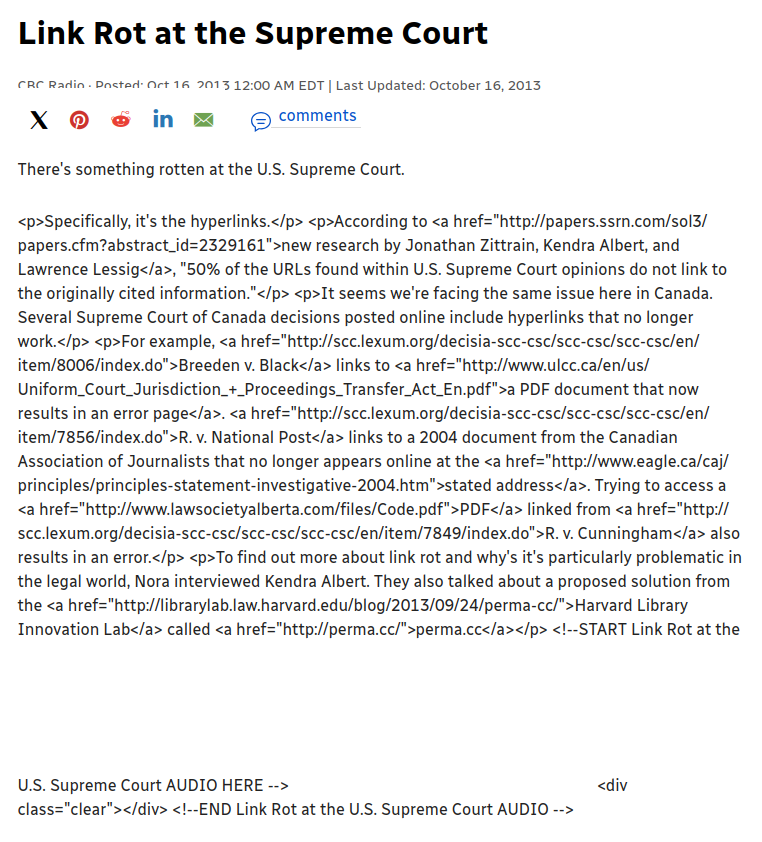
There are a lot of “ifs” here, but data loss is a very real and very concerning issue. A Pew Research report from 2024 has found that an estimated 21% of government webpages contain dead links. In 2017, link rot became enough of an issue in the Supreme Court of Canada that they needed to start archiving external links. Missing documents for court rulings are a massive issue if cases ever need to be revisited. But, humorously enough, the Court’s own list of archived links was taken down in 2024, now redirecting to their home page. The Court, concerned about link rot, has contributed to it themselves. It doesn’t stop there either. More research brought up a CBC article, discussing link rot on the US Supreme Court, which was old enough that the formatting was broken and unreadable. The text portion of the article can at least be recovered in its current state, but the audio part has been lost.
Municipalities would likely keep their own backups, so the risk of data loss isn’t immediately apparent. However, London’s backups are not as publicly accessible as they should be. There is no file browser, searching, or even a list of what data exists, deleted or active. Individuals can go to the city with a Freedom of Information Request and say, “I want file OZ-9321”, but what if you don’t know the specific file number or project you need? Fees are also charged: $5 for a request, and a minimum of $7.50/15 minutes of searching. If you require large amounts of data, you had better have an equally large wallet.
Even if transparency or costs weren’t an issue, getting files directly from the city is less than ideal. Do you have the time to wait for a response to your request? What if the city doesn’t have what you need? Do you care enough to go through all the effort? The city has created a barrier to public information, and this barrier will turn people away.
City Websites Can’t Be Saved
Have you heard the term “crawlers” before? Crawlers are robots that spend all day scouring the internet for new websites, either backing them up or indexing them. The Wayback Machine is the largest archival crawler, recently reaching 1 trillion web pages saved. The Wayback Machine lets people see snapshots of deleted pages, going back in history for every revision captured. These sound like the perfect solution to the link rot problem; Just set them loose on London’s website and everything will be preserved for decades to come. Though despite sounding good, crawlers will never work.
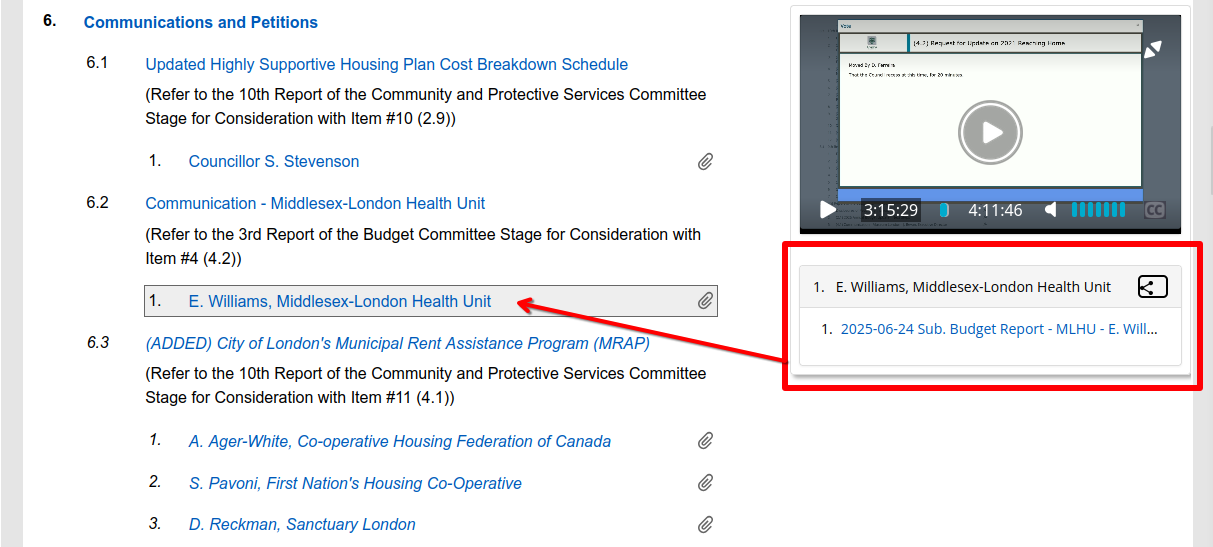
When you go to a meeting agenda and click on a file, you see a little pop-up like the one shown below. You, a smart human being, know to click on the pop-up to view your file. However, a crawler is just a robot. It might try mindlessly clicking on the link, but it won’t “see” the pop-up, and it wouldn’t understand what to do with the pop-up anyway. The crawler will never reach the file, and so the file never gets saved.
This same issue happens with meeting recordings, arguably the most important part of information about councils and committees. Recordings let you see the thought process that goes into voting, the concerns councillors have, and what the public is saying. This is all far more than you’d ever get in the meeting summaries. You might expect such important information to be downloadable, but municipalities often use a service called iSiLIVE. Videos on iSiLIVE are always distributed in special players which never have a download button for people, never have a link for crawlers, and even obfuscate links in the source code for researchers doing manual scrapes.
The simple design choice that kills crawlers in particular is very concerning. If London ever announces they are taking down certain sections of their website (again, hosting old data is costly), then there won’t be the existing backups to rely on. Groups like the Archive Team who watch for dying websites would normally be able to snap into action and help, but they’re out of luck too. This is not good. Remember a few months ago when our neighbors down south started removing thousands of web pages? Being able to create archives is vital to document and maintain history.
The only way to save the contents of these websites is to spend days or weeks of your life writing custom scripts to find all the content, save it, organize it, and set up a way to publicly host everything. I’ve been spending all my time making an archive of London, so trust me when I say no sane person would ever want to do this.
Gimmicks Are Killers
Gimmicks are some of the worst things a website can use. Cities love presenting their information in what they think are “fun” ways. Instead of just having a slideshow, they’ll have an interactive 3D tour…which is just a slideshow with extra steps. The city recently had the perfect example, shown in the screenshot below. No, it’s not a joke. This is a real 3D slideshow discussing biosolids in wastewater.
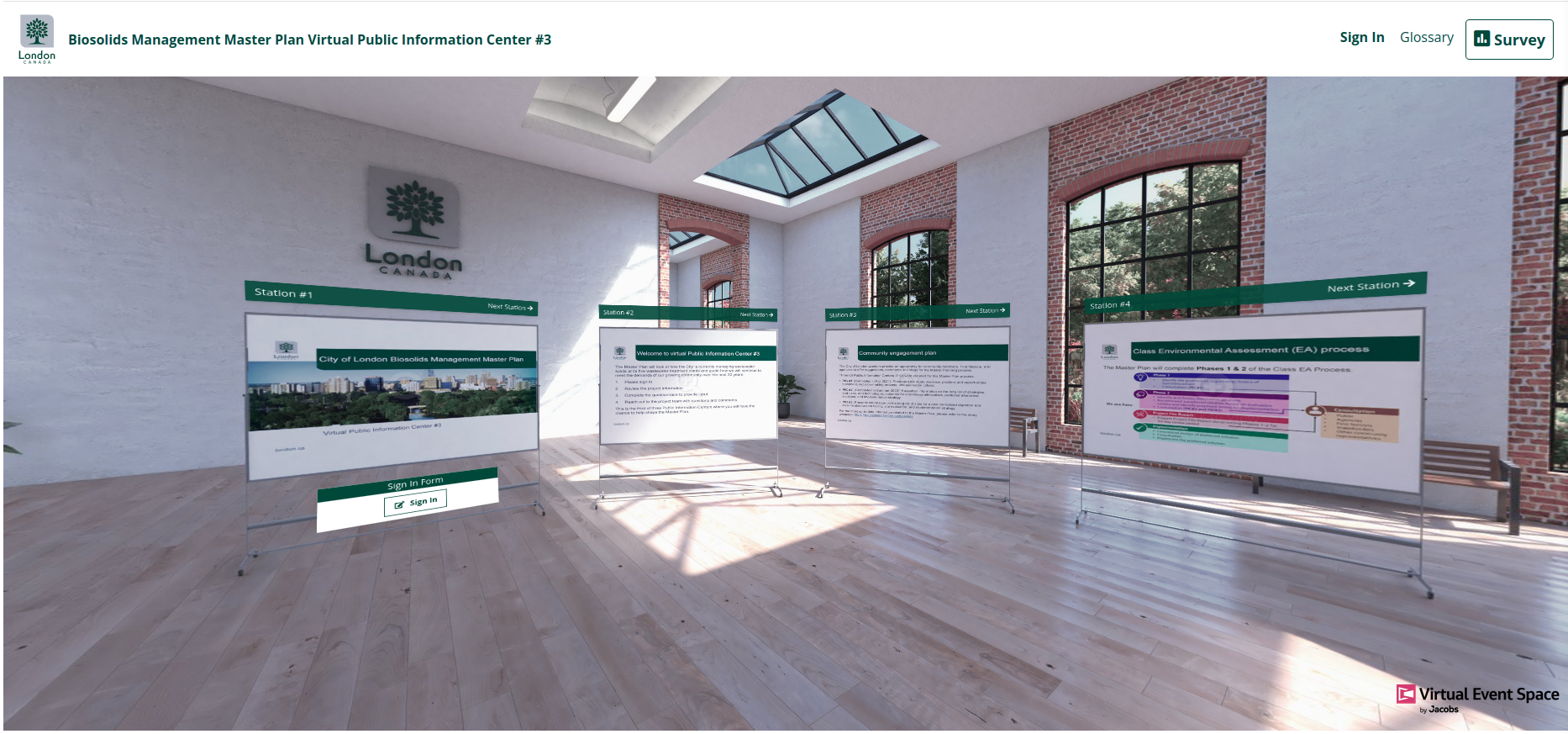
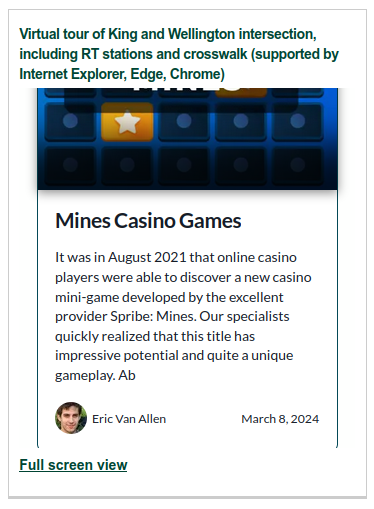
These things seem funny, but they’re not. Aside from gimmicks being an accessibility nightmare, all types of interactive demos are information death. The content on a gimmick website can’t be downloaded by anyone, so you have to go to the service every time you want to see the slideshow. Making custom scraping tools will never help here. Making this even more frustrating, gimmick services rarely last any meaningful amount of time, often being sold off and turned into scam, gambling, or explicit websites. See one of the ones I found in another part of London’s website:
Gimmicks only impact a very small amount of information, but it’s important to point out these crazy designs because they keep happening. Gimmick websites are completely avoidable, and it takes just one person in the office to know the issues and ask, “is this worth it?”
Is There a Solution?
You can ask governments to “do better”, but they’re limited in what they can do. Most cities around London use the same document hosting and management services, and that creates an environment where the common thing—however flawed—becomes more popular, and favored over anything else. I’m using London as an example, but here are a few nearby municipalities with identical services for meetings:
Even governments in the USA use Canadian software:
If a city does consider trying something new, there will be a massive cost to switch services and re-train employees. Changing would take time, and a list of what needs fixing would be a mile long. This would be a daunting task, and why switch when the systems that governments use work for them? I don’t know what a feasible solution would be, but requiring governments to keep links alive would be a good start. Have regular checks to make sure nothing is broken. Create redirects when you move pages around, and don’t just leave a “page not found” error. Make sure there are accessible backups, and make sure people can always download everything they need.
No one person could fix everything, but if you see a broken link or lost information then tell your city. Try suggesting link checking and redirects. Open up the dialogue. Cities probably aren’t aware of the troubles with their own systems, so gently letting them know why data matters could help them do a little bit better.